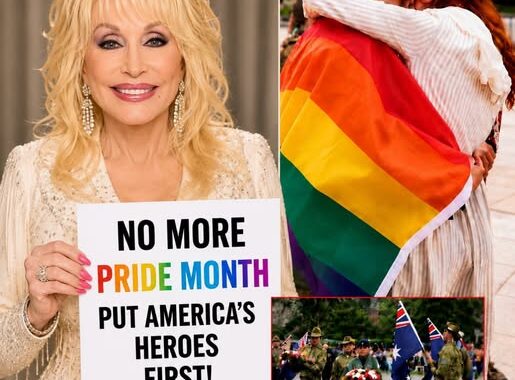
What started as a viral social media post quickly exploded into a nationwide conversation about patriotism, community values, public recognition, anBREAKING: Dolly Parton’s Name Is at the Center of a Heated Online Debate — and Millions of People Can’t Seem to Agree Why
In the age of social media, some of the biggest national conversations begin with something surprisingly small. A screenshot. A short video clip. A viral post shared by thousands of people who have never met each other but suddenly find themselves discussing the same topic. Within hours, a single piece of content can spread across the country, generating millions of views, thousands of comments, and a level of attention that traditional media once needed days or even weeks to achieve.
That is exactly what happened when Dolly Parton’s name unexpectedly found itself at the center of a heated online debate.
What began as a viral social media post quickly expanded into a much larger discussion about patriotism, community values, public recognition, and the role celebrities play in cultural conversations. Within a remarkably short period of time, supporters and critics were flooding comment sections across multiple platforms, each convinced they were defending something important.
As the discussion gained momentum, it became clear that the conversation was no longer just about Dolly Parton.
Instead, it had evolved into something much bigger.
People were debating who deserves recognition in society.
They were debating what values should receive the most public attention.
They were debating the relationship between culture, identity, community, and national priorities.
And perhaps most importantly, they were debating what role public figures should play in these conversations.
For decades, Dolly Parton has occupied a unique place in American culture. Unlike many celebrities who frequently become involved in political disputes, she has built a reputation that extends far beyond music. Millions of people admire her not only because of her songs but because of the values she often represents: kindness, generosity, humility, and compassion.
That reputation is one reason the viral debate attracted so much attention.
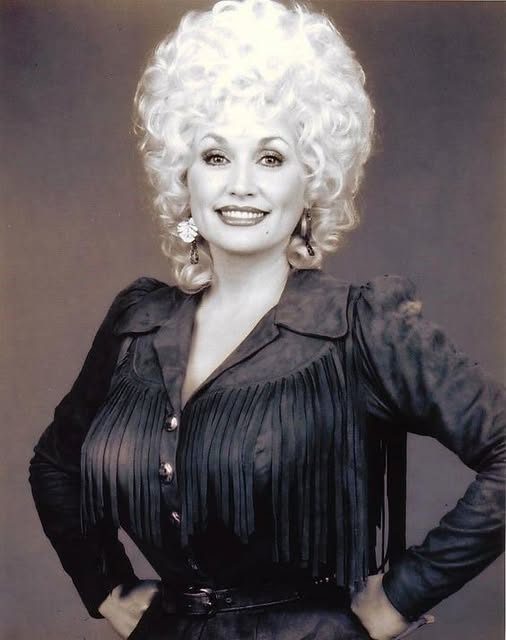
When a figure as widely respected as Dolly Parton becomes associated with a cultural discussion, people pay attention. Fans who rarely engage in online arguments suddenly find themselves reading comments. Casual observers begin sharing opinions. News pages and social media accounts amplify the conversation further.
The result is a feedback loop that can transform a simple online post into a nationwide debate.
As opinions spread across Facebook, TikTok, X, Instagram, YouTube, podcasts, and discussion forums, people quickly divided into different camps.
One group argued that modern society does not spend enough time recognizing veterans, first responders, caregivers, military families, volunteers, and countless community heroes who quietly dedicate their lives to serving others. These individuals often work behind the scenes, receiving little recognition despite making enormous contributions to their communities.
Supporters of this perspective argued that conversations about service, sacrifice, and community responsibility deserve a larger place in the national spotlight. They pointed to veterans who spent years protecting their country, first responders who run toward danger while others run away, and caregivers who dedicate their lives to helping those in need.
In their view, society sometimes overlooks these contributions in favor of topics that generate more attention online.
Others saw the situation very differently.
Critics argued that public recognition should never be treated as a competition. They questioned the idea that honoring one group requires reducing attention toward another. In their view, communities are capable of recognizing veterans, first responders, caregivers, and marginalized groups simultaneously.
Many also expressed concern about the way social media discussions often frame complex issues as simple choices between opposing sides.
To them, the debate itself highlighted a growing problem.
The internet frequently encourages people to think in terms of “us versus them.”
One group versus another.
One cause versus another.
One value versus another.
Yet real life is often much more complicated.
As the discussion continued, a fascinating pattern emerged.
People were not only debating the issue itself.
They were debating what the issue actually meant.
Some viewed it as a conversation about patriotism.
Others saw it as a discussion about inclusion.
Some focused on community service.
Others focused on cultural representation.
The same viral post generated completely different interpretations depending on who was reading it.
That phenomenon says a great deal about the modern media environment.
Today, information travels faster than context.
People often encounter headlines before explanations.
Quotes before full interviews.
Screenshots before complete stories.
As a result, individuals frequently fill in the missing details using their own experiences, beliefs, and assumptions.
This helps explain why a single viral post can produce such dramatically different reactions.
The content itself may be identical.
But the meaning people attach to it varies widely.
For many observers, the debate surrounding Dolly Parton’s name became a reflection of larger cultural tensions already present throughout society. Questions about identity, recognition, public values, and national priorities have been discussed for years. Social media simply provided a new arena where those discussions could unfold in real time.
In that sense, Dolly Parton may have been less the cause of the debate and more the catalyst for it.
The conversation tapped into emotions that already existed.
People care deeply about service.
People care deeply about community.
People care deeply about inclusion.
People care deeply about recognition.
When a topic touches multiple values simultaneously, reactions tend to become stronger.
That is precisely what happened here.
The speed of the debate also demonstrated the extraordinary influence social media now holds over public discourse. A generation ago, discussions of this scale often required television coverage, newspaper editorials, or public speeches. Today, a viral post can achieve the same result within a matter of hours.
Millions of people who would never attend the same event or read the same publication can suddenly find themselves participating in the same conversation.
This level of connectivity has obvious benefits.
It allows ideas to spread quickly.
It gives ordinary people a voice.
It encourages public engagement.
At the same time, it creates new challenges.
Emotions often move faster than facts.
Reactions often move faster than reflection.
And discussions can become polarized before participants fully understand one another’s perspectives.
That reality became increasingly visible as the debate continued to grow.
Supporters accused critics of ignoring the importance of service and sacrifice.
Critics accused supporters of creating unnecessary divisions.
Both sides believed they were defending values worth protecting.
Both sides felt strongly about their position.
And both sides contributed to making the conversation even larger.
Yet perhaps the most interesting aspect of the entire situation is that the discussion eventually became less about Dolly Parton and more about America itself.
People were not simply discussing a celebrity.
They were discussing what deserves recognition.
They were discussing who gets celebrated.
They were discussing the values they believe should shape the future of their communities.
That may explain why the debate reached such a large audience.
Conversations about identity and values are rarely limited to a single public figure.
They resonate because they touch questions people already ask themselves.
What matters most?
Who deserves appreciation?
How should communities balance different priorities?
And what role should public figures play in shaping those conversations?
As the online debate continues, opinions remain divided.
Some believe the discussion has highlighted important issues that deserve greater attention.
Others believe it has created unnecessary conflict where none needed to exist.
But regardless of where people stand, one fact remains impossible to ignore.
A single viral post was enough to spark a nationwide conversation involving millions of people.
In an era defined by algorithms, shares, screenshots, and endless scrolling, that reality may be the most important story of all.
The debate surrounding Dolly Parton’s name reminds us that modern conversations are no longer confined to town halls, television studios, or newspaper columns. They happen everywhere, all at once, across countless screens and countless voices.
And sometimes, the biggest debates are not really about the person at the center of the story.
They are about the values that people bring into the conversation long before the story ever begins.