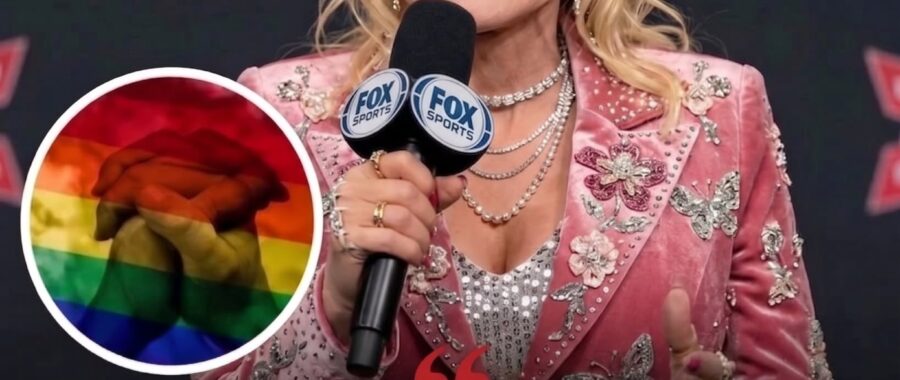
The internet moves quickly. A single image, a short quote, or a few lines of text can travel across millions of screens within hours, generating reactions from people who may never stop to ask where the information originated. In today’s digital world, perception often spreads faster than verification, and few recent examples illustrate that reality better than the viral controversy surrounding Dolly Parton.
What began as a widely shared social media post quickly transformed into a nationwide debate. The post claimed that the beloved country music icon had criticized the use of mandatory LGBT symbols at public events, allegedly describing the practice as a “political charade.” Within hours, the quote appeared across Facebook pages, discussion groups, comment sections, and video platforms. Supporters praised the statement. Critics condemned it. Thousands of people rushed to share their opinions.
There was only one problem.
No verified source accompanied the quote.
Despite the intensity of the reactions, many of the posts spreading online offered no official interview, video footage, transcript, or confirmed statement from Dolly Parton herself. Yet the debate continued to grow, proving once again that the emotional impact of a claim can sometimes overshadow questions about its authenticity.
The controversy was especially striking because of the person at the center of it.
For decades, Dolly Parton has occupied a unique position in American culture. Unlike many public figures who frequently become involved in political disputes, she has built a reputation as someone capable of connecting with people from many different backgrounds. Her image has long been associated with kindness, generosity, humility, and an ability to bring people together through music.
That reputation is one reason the viral quote gained so much attention.
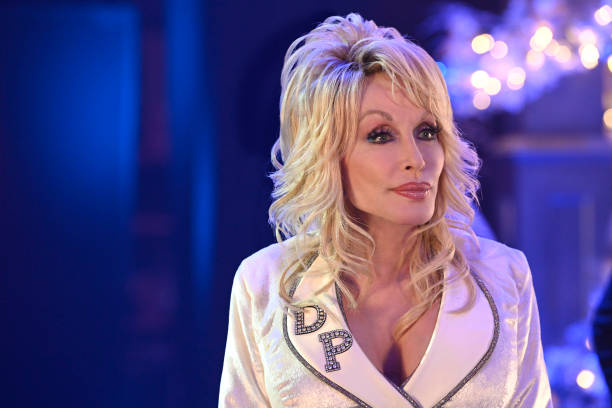
When a celebrity known for avoiding divisive rhetoric suddenly appears connected to a controversial statement, people notice. Supporters and critics alike become curious. Some rush to defend the individual. Others rush to challenge them. The resulting discussion often becomes larger than the original claim itself.
In this case, the conversation quickly expanded beyond the alleged quote.
People were no longer debating only whether Dolly Parton said those words.
They were debating broader questions about celebrity influence, artistic freedom, public expectations, and the role entertainers play in social and cultural discussions.
For some supporters of the viral claim, the alleged statement represented a defense of artistic independence. They argued that performers should not feel pressured to endorse specific political or social causes. In their view, musicians exist primarily to create art, connect with audiences, and tell stories. They saw the quote as an expression of personal freedom and a reminder that artists should have the right to determine how they present themselves.
Others strongly disagreed.
Critics argued that symbols associated with marginalized communities often serve purposes beyond politics. They viewed such symbols as expressions of inclusion, visibility, and support. For them, the issue was not about forcing artists to adopt a position but about recognizing the experiences of groups that have historically struggled for representation and acceptance.
As often happens online, the debate quickly became emotional.
People chose sides.
Arguments intensified.
Comments multiplied.
And yet many participants appeared to overlook the most important question of all:
Did Dolly Parton actually say it?
That question highlights one of the defining challenges of the digital era.
Information has never moved faster. Social media platforms allow content to reach enormous audiences within minutes. While this speed creates opportunities for communication and connection, it also creates an environment where unverified claims can spread before fact-checking has a chance to catch up.
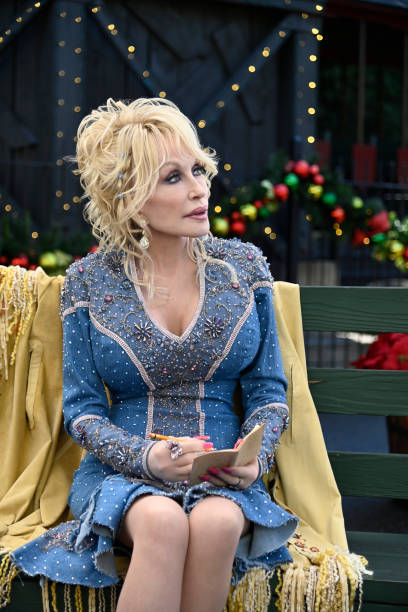
The result is a phenomenon that communication experts have observed repeatedly. Once a story gains momentum, its emotional impact often becomes more influential than its factual foundation.
People react not necessarily to what is true.
They react to what feels true.
That distinction can have significant consequences.
In the case of celebrity culture, viral claims frequently become attached to public figures whether they are accurate or not. Fans and critics may form opinions based on incomplete information. Discussions evolve around assumptions rather than evidence. By the time questions about authenticity emerge, the original claim may have already reached millions of people.
Dolly Parton’s situation illustrates this perfectly.
The discussion surrounding the alleged quote became less about a specific statement and more about what people believed Dolly Parton represented.
Some viewed her as a defender of artistic freedom.
Others viewed her as a symbol of inclusivity.
Still others questioned why any conclusion was being reached before confirmation existed.
As the debate expanded, it revealed something interesting about modern celebrity culture.
People no longer consume information passively.
They actively participate in shaping narratives.
Every comment, share, reaction, and repost contributes to the story’s evolution. Social media users are not merely audiences anymore. They are participants in the construction of public perception.
That reality helps explain why controversies involving major celebrities often become larger than the original issue.
The discussion is no longer controlled by traditional media outlets or official statements.
Instead, it unfolds in real time across countless digital conversations.
For Dolly Parton, the situation also highlights the challenges faced by public figures whose reputations have been built over decades.
A single viral post can suddenly place them at the center of a debate they may never have intended to join.
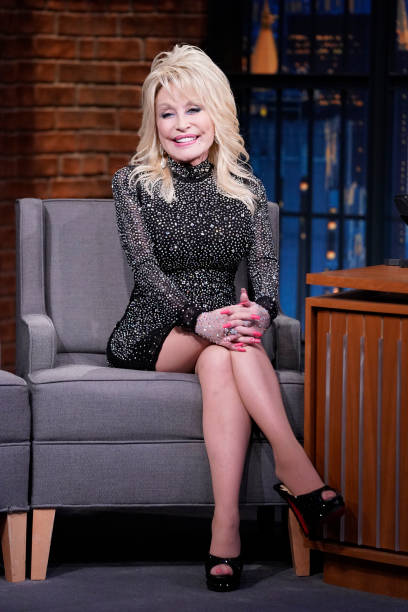
Regardless of whether the claim proves accurate, inaccurate, or somewhere in between, the conversation itself can take on a life of its own.
Many observers believe this phenomenon will only become more common in the future.
Artificial intelligence, edited images, shortened video clips, and viral social media posts are making it increasingly difficult for average users to distinguish between verified information and persuasive content. As a result, public figures may find themselves responding not only to their own words but also to statements attributed to them by others.
This makes media literacy more important than ever.
The ability to pause, verify, and evaluate information before reacting may be one of the most valuable skills in modern communication.
The Dolly Parton controversy serves as a reminder of that reality.
Whether someone agrees with the alleged statement, disagrees with it, or remains undecided, the first question should always concern verification.
What is the source?
Where did the quote originate?
Has it been confirmed?
Without answers to those questions, any discussion risks becoming disconnected from the facts.
As the online debate continues, one thing remains undeniable.
The viral quote succeeded in capturing attention.
It sparked conversations about politics, culture, entertainment, identity, and personal freedom. It revealed how deeply people care about the public figures they admire. And it demonstrated the extraordinary speed with which information—verified or otherwise—can spread across modern platforms.
Perhaps that is the most important lesson in this entire story.
The controversy may appear to be about Dolly Parton.
But it is also about something much larger.
It is about the way information travels.
It is about the way narratives are formed.
And it is about the growing challenge of distinguishing between what is being claimed and what has actually been proven.
In the end, the debate surrounding the viral quote may eventually fade. Another story will emerge. Another controversy will capture public attention. Another social media post will generate millions of reactions.
But the underlying lesson will remain.
In an age where almost anyone can publish almost anything, the search for truth often begins not with an answer, but with a question:
How much of what we are reacting to has actually been verified?