
There are artists who conquer the world through spectacle. Their careers are measured by headlines, controversies, sold-out stadiums, and moments that dominate the public conversation. They arrive loudly, remain loudly, and often leave loudly.
Then there are artists like Don Williams.
He never seemed interested in being the loudest voice in the room. He never chased attention with dramatic gestures or larger-than-life performances. Yet somehow, through a career built on sincerity, humility, and quiet excellence, Don Williams accomplished something extraordinary.
He whispered his way into history.
Long before the music industry became obsessed with constant visibility, Williams understood a truth that many artists spend their entire careers searching for: people do not remember how loudly you spoke. They remember how deeply you made them feel.
That gift became the foundation of everything he created.
When fans think about Don Williams today, they rarely begin by talking about awards or chart positions. Instead, they talk about memories.
They remember hearing his voice on long drives home after work.
They remember family gatherings where his songs drifted through open windows.
They remember quiet evenings, old radios, and moments when life felt simpler.
His music became attached to ordinary experiences, and because of that, it became unforgettable.
Perhaps that is what made him so unique.
Many performers ask audiences to look at them. Don Williams invited audiences to look at their own lives.
His songs were never about proving how remarkable he was. They were about reminding listeners that their own stories mattered.
Whether he was singing about love, faith, friendship, loneliness, or hope, there was always a sense that he understood something essential about being human.
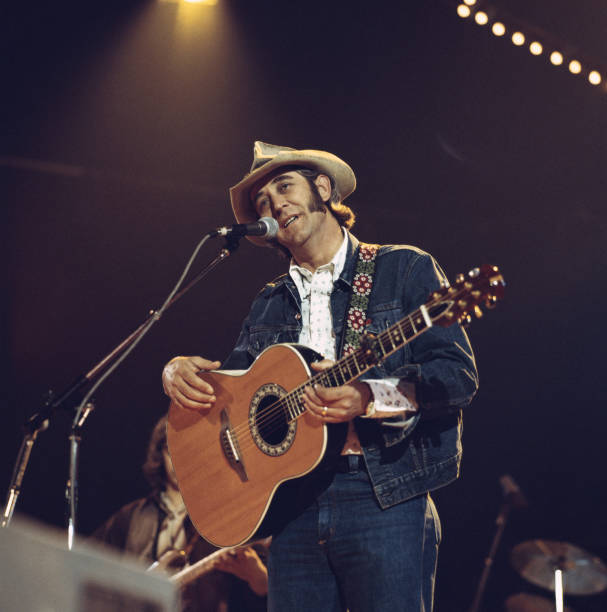
He sang to people rather than at them.
That distinction may seem small, but it explains why his music continues to resonate decades after many of his contemporaries have faded from public memory.
Williams possessed one of the most recognizable voices in country music history. Deep, warm, and remarkably steady, it carried a sense of reassurance that listeners immediately trusted. There was no strain, no excess, and no attempt to overpower the audience.
His voice felt like a conversation.
It felt like wisdom shared from across a front porch at sunset.
It felt like someone who had lived enough life to understand both joy and disappointment, yet still believed tomorrow might bring something good.
That quality became his signature.
At a time when many artists relied on vocal acrobatics and dramatic performances, Williams demonstrated the power of restraint. He understood that a song did not need to shout to be heard.
In fact, some of the most meaningful messages are delivered softly.
His nickname, “The Gentle Giant,” captured this perfectly.
Standing over six feet tall with a commanding presence, Williams certainly looked imposing. Yet everything about his personality suggested the opposite. Fans consistently described him as humble, approachable, and genuine.
The nickname endured because it reflected something deeper than physical appearance.
It reflected character.
And character, more than talent alone, became one of the defining elements of his legacy.
Throughout his career, Williams seemed remarkably comfortable being himself.
He never appeared interested in creating a larger-than-life persona. He did not build a career around controversy. He did not constantly reinvent his image in pursuit of relevance.
Instead, he offered audiences authenticity.
Year after year.
Album after album.
Song after song.
In today’s entertainment landscape, that approach feels almost revolutionary.
Modern culture often rewards visibility above all else. Artists are expected to remain constantly present, constantly engaging, and constantly generating attention. Success is frequently measured by how often someone appears in the public eye.
Don Williams belonged to a different era.

More importantly, he represented a different philosophy.
He seemed to understand that true influence does not require constant exposure.
Sometimes influence grows quietly.
Sometimes it spreads one listener at a time.
Sometimes it becomes so deeply embedded in people’s lives that they hardly notice its presence until it is gone.
That is precisely what happened with Don Williams.
For years, his music served as a source of comfort for millions. His songs accompanied people through heartbreak, marriage, parenthood, aging, and loss. They became trusted companions during life’s most significant moments.
Then, when he was gone, fans suddenly realized how much space he had occupied in their lives.
Not through noise.
Through consistency.
Not through spectacle.
Through sincerity.
His passing marked more than the loss of a successful musician. It marked the loss of a certain kind of artist—one whose primary goal seemed to be connection rather than attention.
The remarkable thing is that his influence has not diminished.
If anything, it has grown.
Younger generations continue discovering his music through streaming services and social media clips. Older fans return to familiar songs and hear them with new appreciation. What once felt comforting now feels precious.
The world has changed dramatically since Williams first began recording.
Technology has transformed how music is consumed.
Society moves faster.
Attention spans grow shorter.
Public discourse becomes louder.
Yet the qualities that made Don Williams special remain surprisingly relevant.
Perhaps even more relevant than before.
People are exhausted by constant noise.
They are overwhelmed by endless conflict and distraction.
Many are searching for something genuine.
Something calming.
Something real.
When they discover Don Williams, they find exactly that.
His music reminds listeners that life does not have to be rushed.
That meaningful moments are often simple moments.
That kindness is not weakness.
That humility is not insignificance.
That strength can be quiet.
These lessons extend far beyond music.
They explain why Williams continues to matter.
His legacy is not merely a collection of recordings. It is a way of approaching life.
A way of treating people.
A way of understanding success.
In an industry that often celebrates ambition above all else, Williams demonstrated the value of contentment.
He seemed grateful for what he had rather than obsessed with what he lacked.
That attitude resonated deeply with audiences because it felt increasingly rare.
People trusted him because he appeared trustworthy.
They believed him because he appeared sincere.
And sincerity, once earned, creates a bond that survives generations.
This is why conversations about Don Williams often become conversations about something larger.
Fans begin by discussing music.
Soon they are discussing memories.
Then values.
Then life itself.
Very few artists inspire that progression.
Most entertainers occupy a specific cultural moment.
Williams transcended his.
His songs continue speaking to experiences that every generation understands.
The desire to be loved.
The hope for better days.
The comfort of home.
The importance of family.
The search for peace.
These themes never disappear because they are woven into the human experience itself.
As long as people continue searching for those things, Don Williams will remain relevant.
Years after his passing, listeners still find themselves returning to his music during difficult times. They continue drawing strength from lyrics they first heard decades ago. They continue recommending his songs to friends and family.
Not because they are nostalgic.
But because the music still works.
It still comforts.
It still inspires.
It still feels honest.

That may be the greatest achievement any artist can hope for.
To create work that remains meaningful long after trends have changed.
To leave behind something that continues helping people.
To become part of lives you will never personally witness.
Don Williams accomplished all of that.
And he did it without demanding attention.
Without creating controversy.
Without chasing headlines.
He accomplished it through patience, authenticity, and a belief that genuine connection matters more than publicity.
That is why he remains one of country music’s most beloved figures.
That is why fans continue sharing his songs.
That is why his voice still feels familiar to people who have never met him.
The Gentle Giant did not force his way into history.
He did not shout for recognition.
He did not demand remembrance.
Instead, he did something far more remarkable.
He earned it.
One song.
One listener.
One memory at a time.
And in doing so, Don Williams achieved something few artists ever truly achieve.
He became timeless.
The world may always remember the loudest voices.
But it never forgets the ones that spoke directly to the heart.
That is why, years later, the Gentle Giant still matters.
Because his whisper became a legacy.
And that legacy continues to echo across generations.